






Internal shading & window furnishings
Keep cool, avoid glare
Text Johan DebaereImage Helioscreen
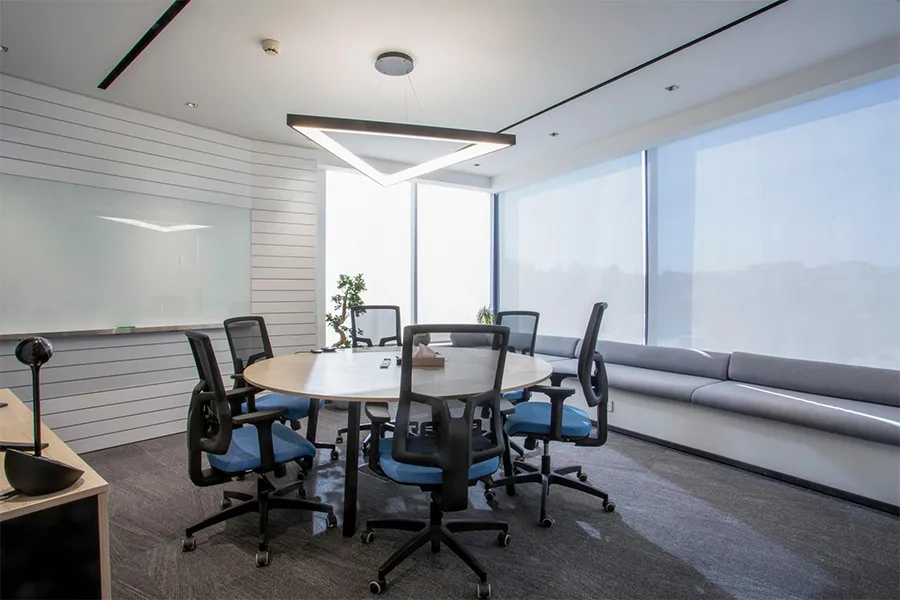
Project with Helioscreen Panama Pro 3% white-pearl in Jordan
In new construction or renovation projects, architects, contractors and building owners must also consider the indoor climate. For example, sunlight must not cause the indoor temperature to rise too much or cause glare. This is certainly a challenge in Jordan, where the average annual temperature is around 25°C. Under these conditions, Ghattas Industrial & Trading Blinds Co, Helioscreen's local partner, chose Helioscreen's Panama Pro 3% white-pearl for its roller blinds for the headquarters of PriceWaterhouseCoopers.
Avoiding heat, bringing calm
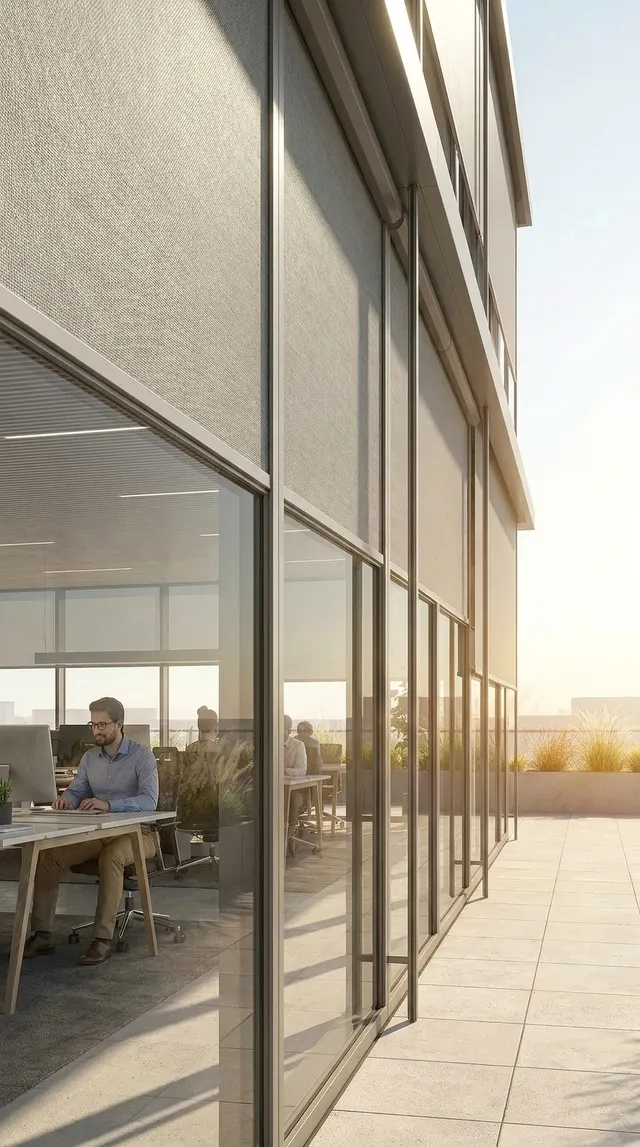
A temperature of up to 30 °C and full sun for 13 hours, conditions also faced by the employees of PriceWaterhouseCoopers' office in Jordan. One of the tasks for interior architect Dal Design was to protect the audit firm's employees from strong interior heating and disturbing glare. Therefore, the interior designer chose 1,100 m² Panama Pro 3% white-pearl from Helioscreen for the blinds, suggested, supplied and installed by local blinds company Ghattas Industrial & Trading Blinds Co.
According to the sun protection company, this fabric not only provides the desired protection against heat and glare, but also perfectly matches the theme and color spectrum in the different areas of the office building in terms of color. The white and gray tones recur in different areas, creating a calming environment without monotony. The architect's design consists of an interplay of colorful furniture in different sizes and shapes. The brighter colors of the furniture create an attractive environment and should inspire employees.
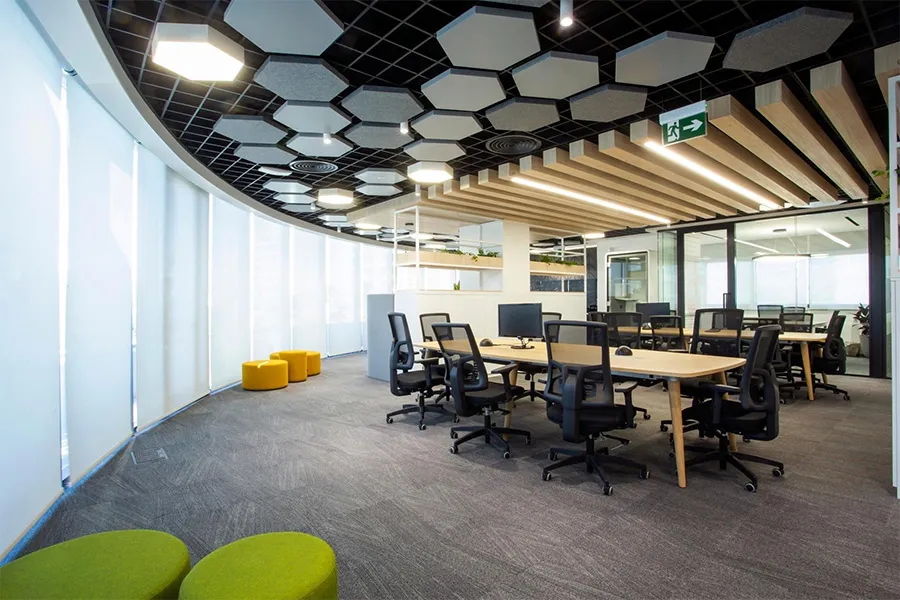
Smart shading sharply reduces energy consumption
This project is forward-looking in terms of energy savings. The European Solar Shading Organization (ES-SO) recently presented a Guidehouse study showing that by 2050, up to 100 million tons of CO2 emissions could be avoided and 285 billion euros saved in Europe through the application of smart solar shading. That means 60% less energy would be needed to cool buildings.
During the first Global Shading Day on March 21, ES-SO revisited this study. Buildings are still the biggest energy consumers today with as much as 40% of energy consumption and 36% of greenhouse gas emissions. Time to intervene, they think at ES-SO, because otherwise, with more frequent heat waves and climate change, 60% more buildings will need air conditioning. Global Shading Day will therefore be held on the first day of spring every year from now on, with the aim of giving people that extra push to discover the benefits of solar shading. Helioscreen has already indicated its full support for this initiative by ES-SO.
Question about this story? Ask your question
Keep following this
Get an email when a new story is published. No account needed.
- SubjectInternal shading & window furnishings