






Mermet presents new screen fabric Screen Progress
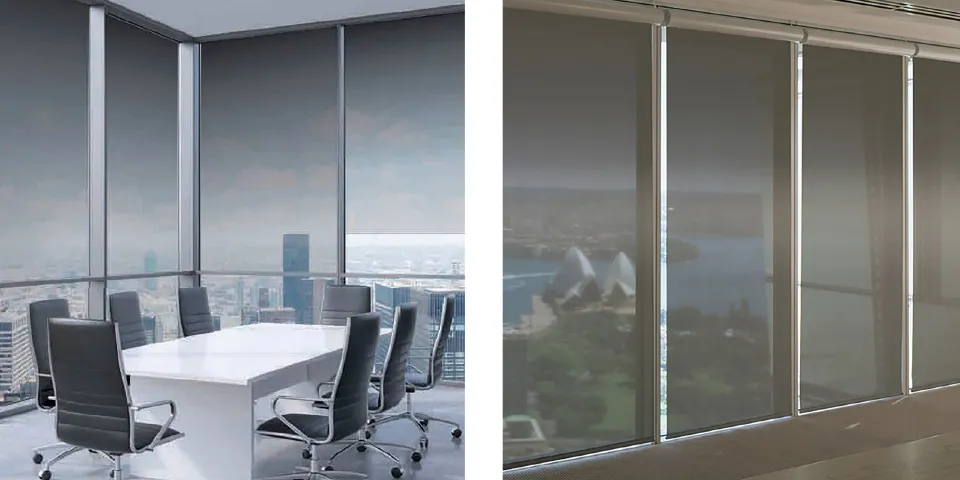
VARIABLE DENSITY CLOTH
That the impact of the energy consumption of buildings for heating and cooling on the environment and climate is significant may by now be assumed to be well known. As much as forty percent of CO2 and other greenhouse gases comes from the built environment. To meet the Kyoto targets, it is therefore essential to improve the energy performance of buildings. Cloth manufacturer Mermet is doing its best to contribute to this. The latest product launched by the French cloth manufacturer for this purpose is a special screen fabric with a variable weave: Screen Progress.
Screening fabrics have a double effect. First, they reduce energy consumption because heating, air conditioning and artificial light need to be used less intensively. Second, they make people feel better inside buildings because the temperature is more comfortable and optimal use is made of daylight. The latter effect in particular should not be underestimated. Scientific research has shown that daylight enhances people's well-being and increases productivity and the ability to learn.
Screen cloth is therefore an effective means of blocking or allowing sun and light. That new developments are also possible in screen cloth, Mermet proves with Screen Progress. This indoor screen fabric has an openness factor ranging from 3 to 17%.
To combat light pollution and glare with screens, dark-colored cloths with a low openness factor are normally recommended, which have low light transmission (Tv < 10%) have. However, such a screen fabric allows little natural light through, so artificial light will be needed to illuminate the space behind.
One solution for three functions
The innovation offered by Screen Progress from Mermet is a fabric with a gradually changing density. In doing so, Mermet sought to develop a single solution to three problems: reduced light pollution and glare, excellent transparency and more natural daylight inside. All this combined with the energy-saving propertiesof screens.
Depending on the spatial configuration, the screen fabric Screen Progress lets in natural light through the open woven portion. The light transmission Tv of the most open part of the fabric is between 17 and 34%, depending on the chosen color of the fabric. The light transmittance Tv of the most closed part of the fabric, intended to prevent too much incoming sunlight and prevent glare in the interior and screens is between 3 and 19%, depending on the color of the fabric chosen.
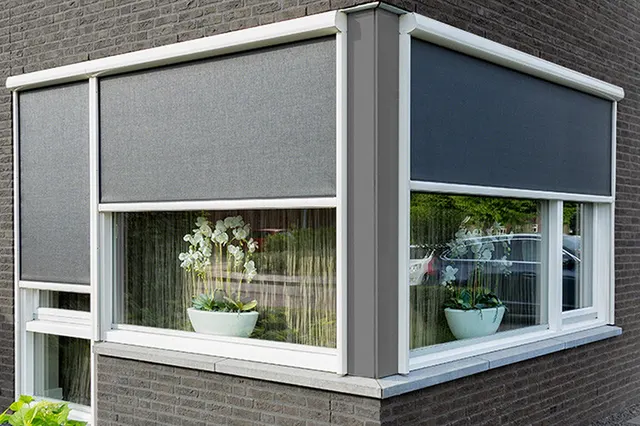
Preventing light nuisance (glare) while maintaining maximum penetration of natural light and excellent transparency are the objectives that Mermet set itself when developing Screen Progress. The fabric can remain down during the day: excessive light and glare at workstations are prevented, while natural light can simply enter the room. An additional advantage if all the cloths remain down is that the appearance of the building from outside is not disturbed.
Other properties of Screen Progress according to Mermet's statement are:
- The screens used meet all the needs of the users: prevention of light pollution (glare), natural light and preservation of visibility to the outside.
- Reduced energy use for artificial light while filtering natural light to desired levels.
- Good degree of transparency.
- Harmonious exterior facade appearance.
- Custom-made canvases, depending on the beneedles for a particular building. Choice of 22 colors from the M-Screen collection.
- Mould resistant and durable (tested through 10,000 cycles, class 3 NF EN 13120), good mechanical resistance: perfectly flat hanging, even for canvases of large sizes.
- Meets standard health and safety requirements applicable to publicly accessible buildings.
Two directions
Screen Progress can be used in two directions: depending on the situation and the wishes of the end users, the tightly woven part can be used at the top and the open woven part at the bottom or vice versa.
When there are open office spaces and curtain walls, the very top of the windows is likely to cause nuisance from direct incoming sunlight. By placing the tightly woven part of Screen Progress at the top, the power of incoming sunlight is significantly attenuated, preventing annoying glare and other light nuisances. The open woven lower part allows sufficient daylight to continue to enter.
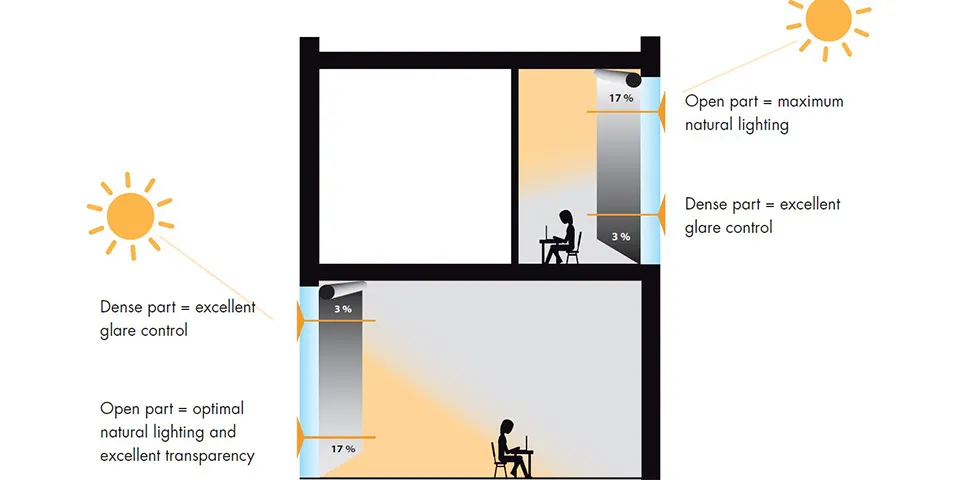
If the office spaces are close to the window and/or the windows are less high, the open woven part of Screen Progress is placed right at the top to illuminate the space from the ceiling, while preventing annoying glare and other light nuisance at the workstations.
Question about this story? Ask your question
Keep following this
Get an email when a new story is published. No account needed.
- ThemeSolar shading against heat and energy loss
- SubjectExteriors