






Shading is good for the climate
VELUX bepleit in zijn betoog de combinatie van (nacht)ventilatie en zonwering.
In its argument, VELUX advocates the combination of (night) ventilation and shading. The company itself has numerous shading products for skylights in its product range. The blinds for "ordinary" windows and facades come from "ordinary" blinds manufacturers. Of course, there are many of these, but it just so happens that markilux has recently come out to point out the importance of sun protection. Hence, they are featured here.
With the Umweltbundesamt, markilux notes that summers over the past five years in homeland Germany have been the hottest since measurements began, a trend that appears to be continuing this year. "A good shading system for windows is therefore useful, because this prevents it from getting too hot inside," said Director of Production and Technology Michael Gerling. "This saves on energy for cooling a home or building and releases less CO2 into the atmosphere."
"Climate change is increasingly evident," Gerling continued. "The sharp decrease in rainfall and the record temperatures of the past five summers are clear signs of this. The result: without shade provision, buildings heat up even faster, especially if there are large window areas. Heat gain depends on the orientation of the windows and the type of glazing. Exterior shading blocks the sun's rays before they reach the glass and can prevent it from getting too hot inside."
Cooler rooms and less CO2
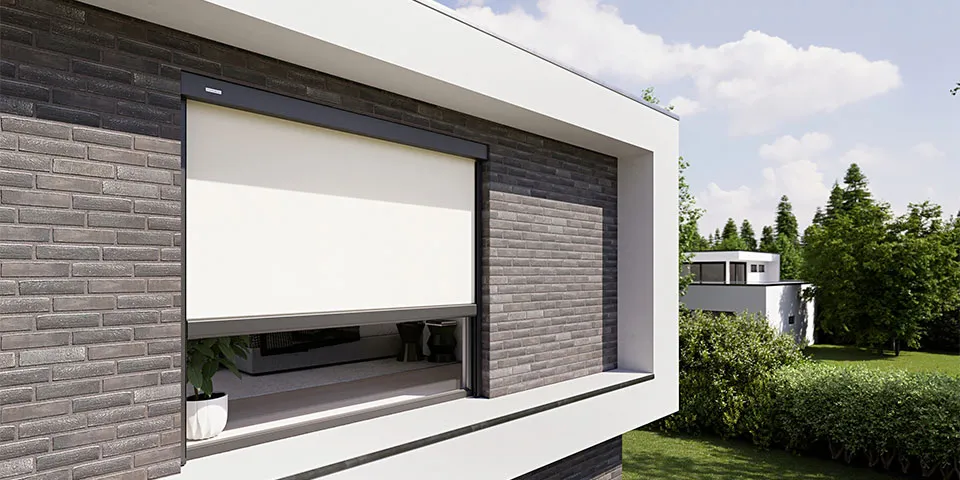
There are, of course, numerous ways to block out the sun. Gerling focuses in his talk on textile, vertical blinds - screens -.
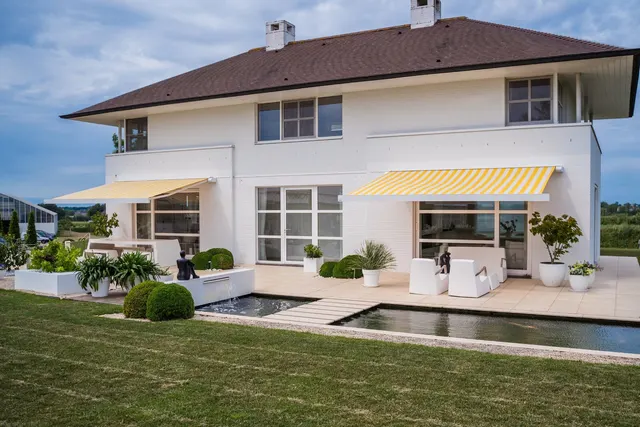
which are available in a wide variety of sizes. "They seal off windows and fenestration optimally and keep the heat out," Gerling said. "Vertical screens can be mounted on the house wall or built neatly into the day. The windows are protected this way, especially with the zipper screens, where the fabric is fixed in the side guides."
"On top of that, the awning fabric we use reflects over 30% of the sun's energy," Gerling continued. "Special pigments on the surface of the slightly transparent VUSCREEN fabric ensure this." Rooms shaded on the outside are as much as ten degrees cooler than unshaded rooms, according to a 2018 study by the German Industry Association for Sunshades and Shutters (IVRSA). One of the study's conclusions was further that this can save up to 50% on cooling energy from air conditioning systems and fans. Sensible outdoor shading systems could reduce CO2 emissions by about six million tons annually, according to the IVRSA.
Energy savings through automatic operation
"The prerequisite for this is that they are motorized systems," Gerling observes. "Only in this way can the cooling effect be effectively utilized." Outdoor blinds can be controlled via sensors or a timer and can also be integrated into a smart home system. Via an app on a smartphone, the control can be controlled very easily and the blinds can be lowered before the outside temperatures rise. The advantage of textile vertical blinds, according to Gerling, is that they do not completely darken a room and allow air ventilation through the blinds fabric. "A well-planned shade provision is therefore a useful investment that prevents overheating of rooms in summer and is at the same time climate- and user-friendly," Gerling said.
Question about this story? Ask your question
Keep following this
Get an email when a new story is published. No account needed.
- SubjectSolar shading & canopies