






ES-SO wants to take the next step.
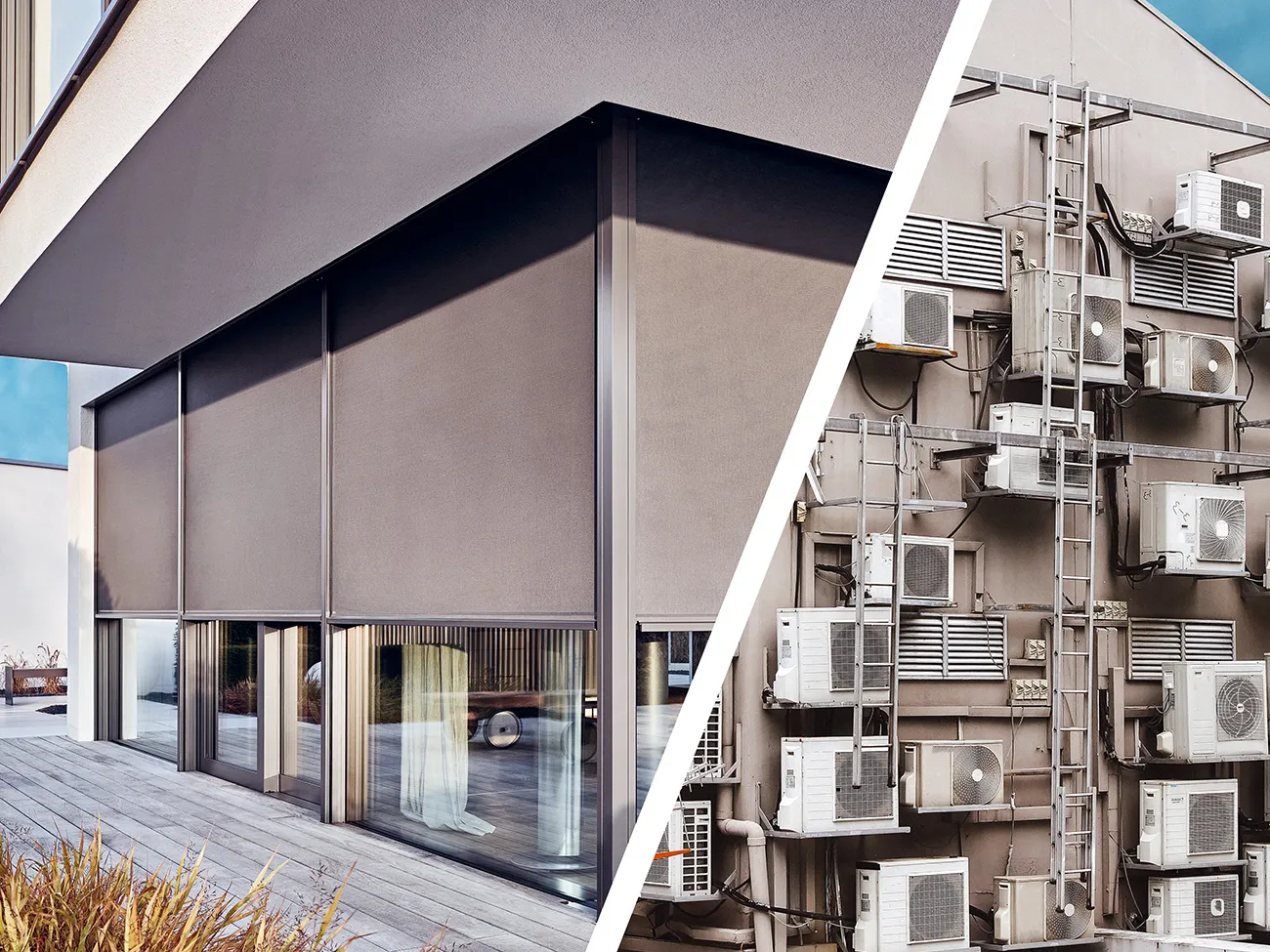
Nu de opwarming van de aarde steeds sneller gaat, vinden ze bij ES-SO dat het verplicht stellen van geautomatiseerde zonwering een eerste stap moet zijn in de strijd tegen oververhitting van gebouwen.
'MANDATORY AUTOMATED BLINDS!'
With global warming accelerating, they believe at ES-SO that making automated solar shading mandatory should be a first step in the fight against building overheating. According to new research findings, the time is right. Automated solar shading should be made mandatory within the framework of the European Energy Performance of Buildings Directive (EPBD).
Smart shading could reduce energy consumption for air conditioning in European buildings by as much as 60% by 2050. This could avoid up to 100 million tons of CO2 emissions and save 285 billion euros. This is according to scientific research by Guidehouse, which was the first to compare the impact of shading with the use of air conditioning. According to ES-SO, the umbrella organization of the European solar shading industry, the study proves the urgent need for automated solar shading to make buildings more climate proof and energy efficient. ES-SO is therefore working to make automated solar shading mandatory within the European Energy Performance of Buildings Directive (EPBD).
Fight against overheating in buildings
As an umbrella organization, ES-SO is convinced that automated solar shading is the best defense against climate change and can be a structural part of the solution. Based on the results of the Guidehouse study, ES-SO urges EU policymakers to make solar shading the first solution in the fight against overheating mandatory in the EPBD, i.e. before active cooling, such as air conditioning.
"Buildings are the biggest energy consumers in Europe today," states ES-SO President Anders Hall. "They consume 40% of our energy and are responsible for 36% of greenhouse gas emissions. Guidehouse's study results are downright impressive, with potential energy savings of up to 60% for building cooling by 2050. This research shows that there is no room for delay and that solar shading must become the first solution in the fight against overheating in buildings. We are already looking ahead to a future where buildings will be more climate resilient and less energy dependent."
Study: shading versus air conditioning
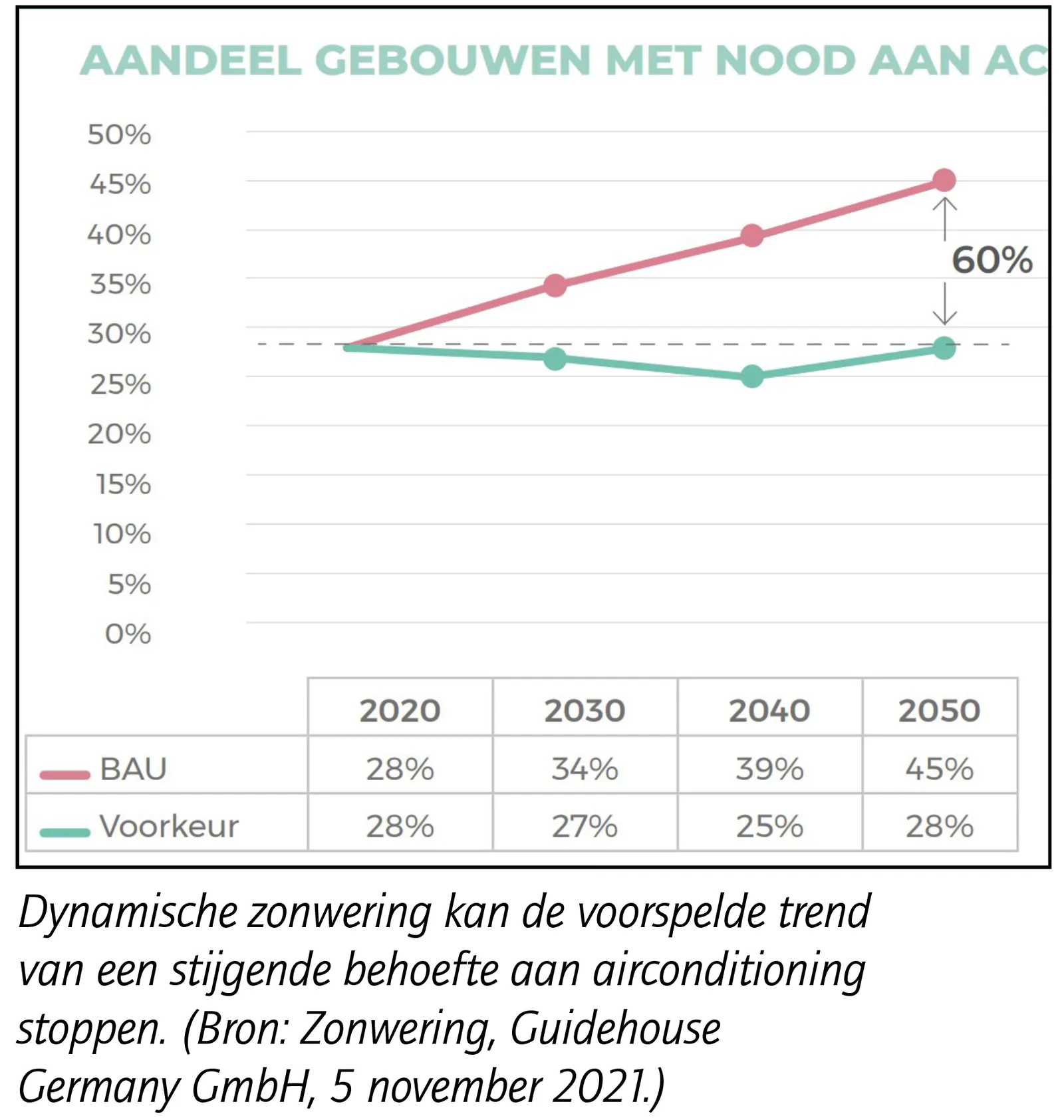
Climate change goes hand in hand with higher average temperatures and longer, more intense heat waves. The number of buildings requiring air conditioning is estimated to rise 60%. Guidehouse, which acts as a consultant to public and commercial markets around the world, analyzed the impact of shading versus air conditioning use in buildings in its study.
The simulations and different scenarios do not lie, Anders Hall observes. "If smart shading is used as the first measure, before active cooling - that's the preferred scenario - then we can stop the growth in the number of buildings that need air conditioning between now and 2050 between."
Dynamic shading can halt the predicted trend of a rising need for air conditioning. (Source: Solar shading, Guidehouse Germany GmbH, Nov. 5, 2021.)
Positive impact of solar shading
Guidehouse's study results show a clear positive impact of automated solar shading on the planet, society and people alike.
- Planet: CO2 reduction strategy - Under the Guidehouse study's preferred scenario, up to about 100 million tons of greenhouse gas emissions (*) could be avoided between now and 2050. This reduction of 100 million tons of CO2 emissions is comparable to the annual CO2 emissions of 22 million cars.
(*) The CO2 factors are aligned with the EPBD Impact Assessment 2021 and are based on the European Commission's Climate Target Plan 2030.
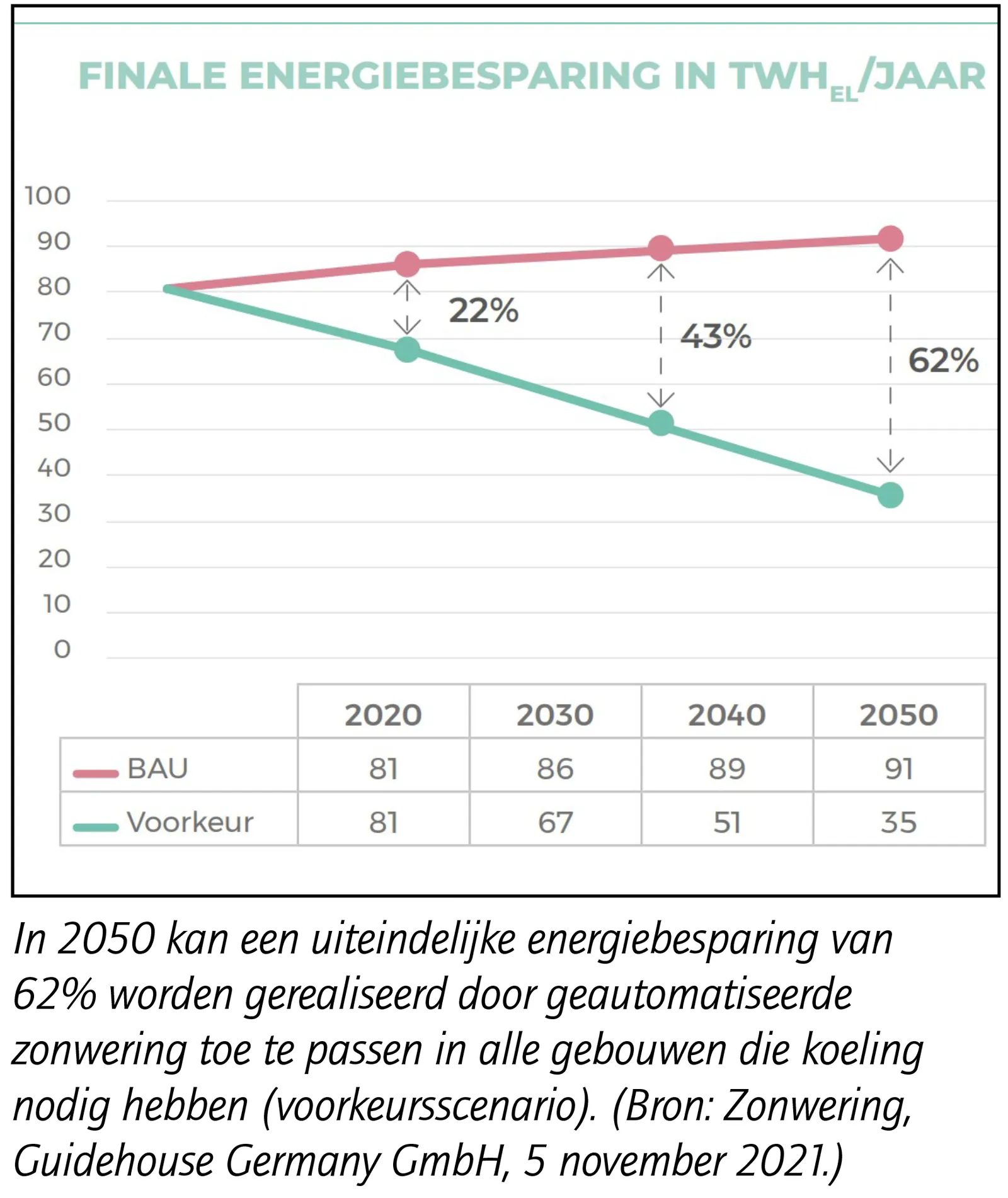
- Society: strategy to save energy first - In the preferred scenario, solar shading can reduce energy consumption for cooling in buildings in Europe by 60%. According to the Guidehouse study, this energy saving (of about 870 Terawatt hours of electricity or 870 billion Kilowatt hours) corresponds to the final energy consumption of Spain which has 47 million inhabitants.
- Human: strategy for greater cost efficiency - The study further shows that solar shading is a much more cost-effective investment than active cooling, such as air conditioning, because solar shading could save up to 285 billion euros between now and 2050. This amount is comparable to the GDP of Finland and Luxembourg combined.
The potential contribution of solar shading to the European Green deal is enormous, also states Shady Attia, professor of sustainable architecture and building technology at the University of Liege. "Today, less than 50% of buildings are equipped with solar shading, much of which is not automated. The results of the Guidehouse study confirm my belief that shading is a much better solution for our planet than air conditioning and that we urgently need to consider automated shading to make buildings more climate-resilient and energy-efficient."
By 2050, an ultimate energy savings of 62% can be achieved by applying automated shading in all buildings requiring cooling (preferred scenario). (Source: Solar shading, Guidehouse Germany GmbH, Nov. 5, 2021.)
Question about this story? Ask your question
Keep following this
Get an email when a new story is published. No account needed.
- ThemeSolar shading against heat and energy loss
- SubjectSolar shading & canopies