






A matter of look-through
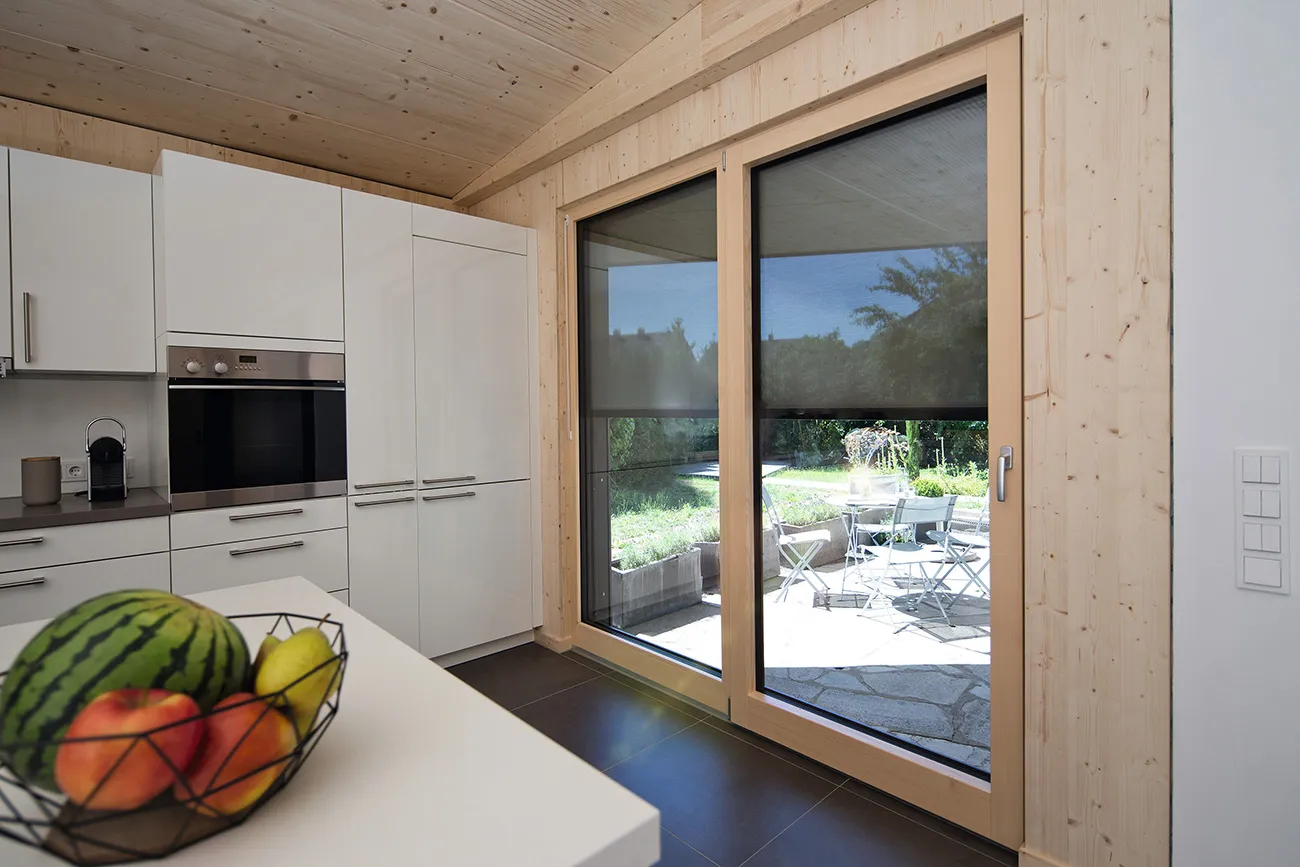
Warema Screen fabric in new designs and with different opening factors for user-oriented view and glare protection
Those who shade their rooms with Warema frame screens can decide how much see-through is preserved at the window. Because with the newly designed Screen screens, different opening factors are possible - from completely opaque to perfect see-through. Thus the bedroom remains dark if desired, while glare protection in the office or living room allows visual contact with the outside even when the screen is closed.
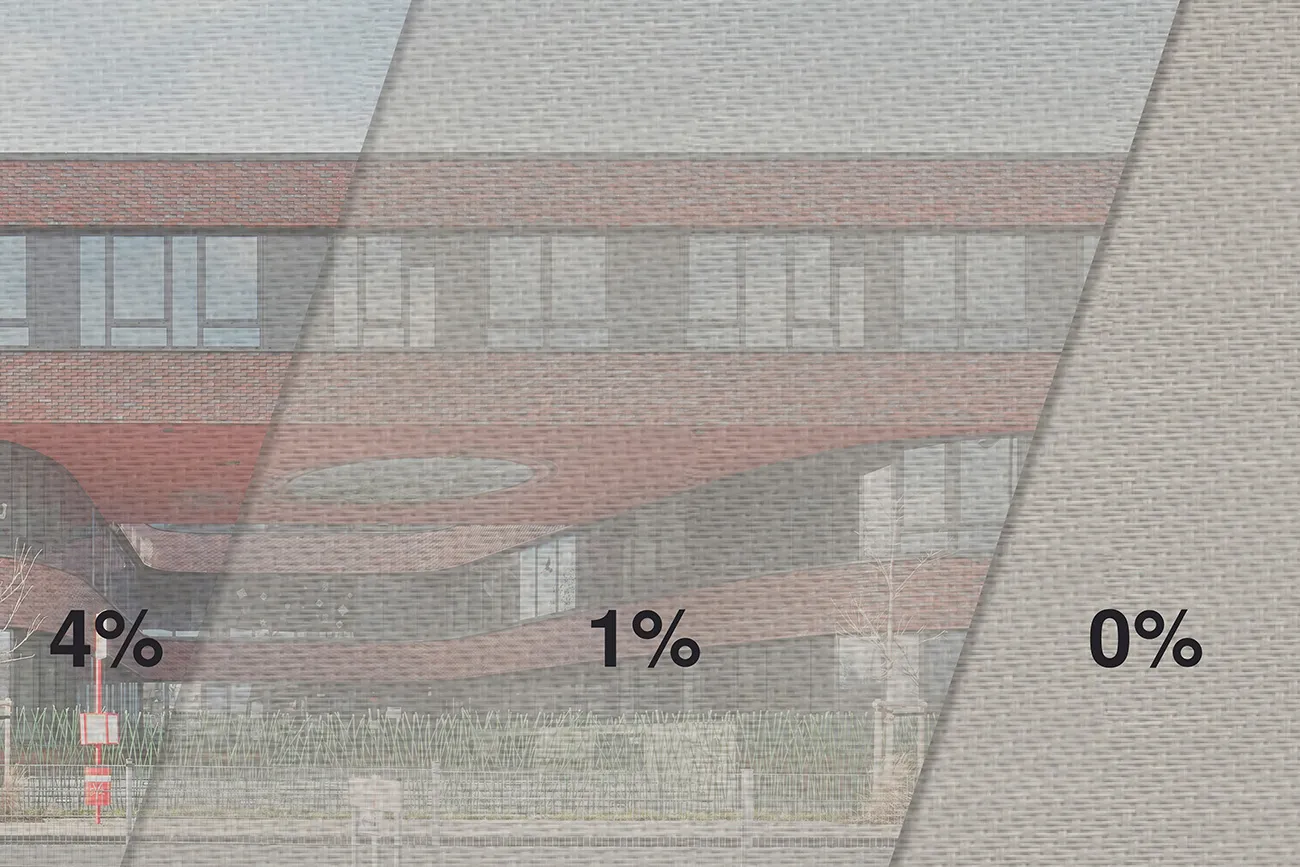
With vision and glare protection at windows, it's always one of those things - on the one hand, a screen fabric should protect you from prying eyes and even from intrusive sun rays, but on the other hand, you don't want to sacrifice visual contact with the outside world for it. The solution are screens, whose blackout levels (opening factor) allow both one and the other. In other words, they protect privacy and dampen the sun's rays, but at the same time allow visual contact with the outside because the fabric is not completely opaque thanks to the corresponding mesh size - ideal for living spaces. In bedrooms or children's rooms, however, optimal blackout with an opening factor of zero percent is preferred. Clearly a case for Warema, whose Screen fabric collection is not only presented with new designs, but is also available with different opening factors between 0 and 5%.
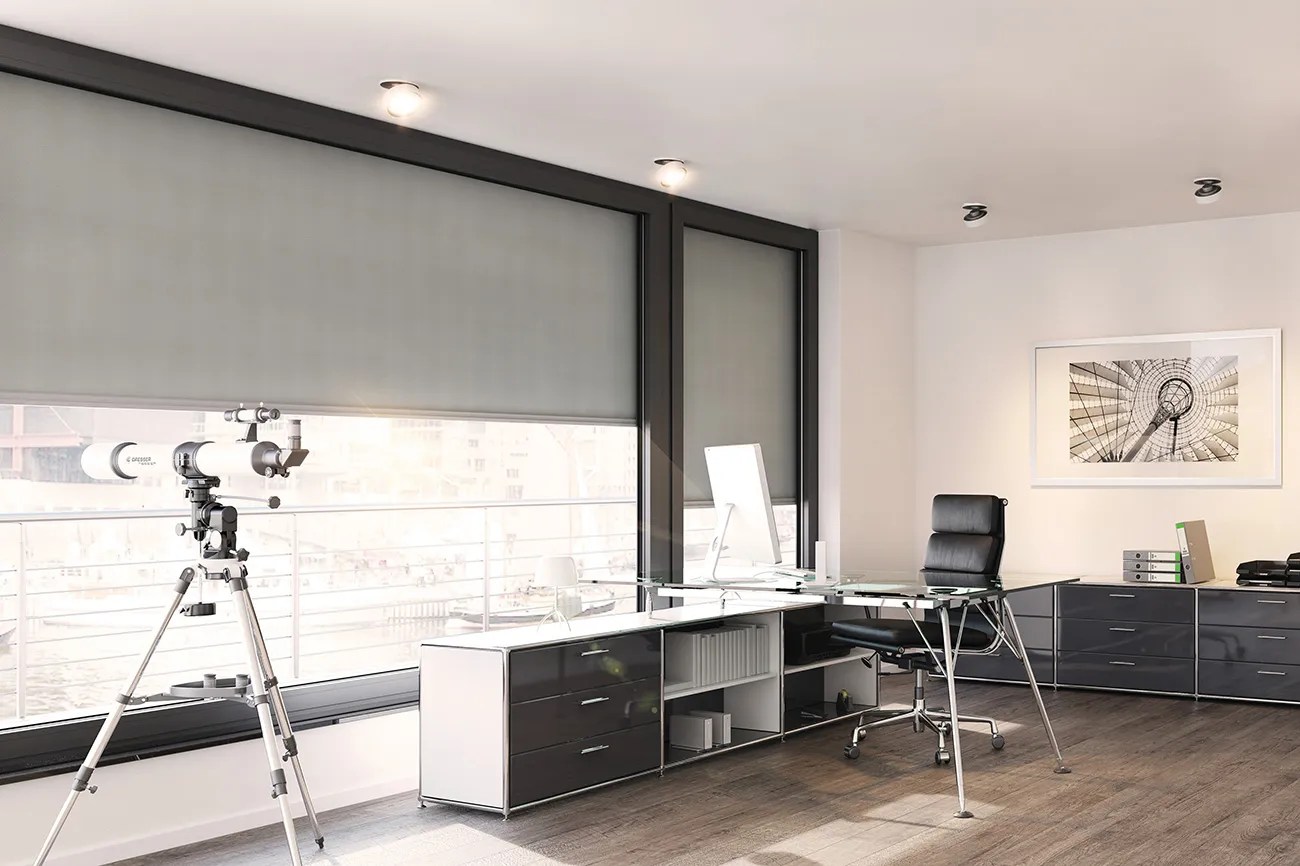
0 % Opening factor - a screen that works almost like a shutter
If you don't want to compromise when it comes to optimally darkening your room or maintaining privacy, but prefer a screen to a shutter, you're on the safe side with Warema frame screens with easyZIP guidance and a screen with 0% opening factor - the darkened room remains as dark as possible when the screen is closed. That is:
- practically no energy input from the sun,
- no glare (with all cloths protection class 4 against glare),
- no ingress of daylight and
- no sight connection to the outside.
On the other hand, that also means: Um to orient yourself in the room you need artificial light, or you leave the screen slightly open. This limits the sun protection effect, so that in certain cases a higher opening factor may be the better option. Especially since there is no visual contact to the outside when the screen is completely closed. Just as is the case with a lowered roller shutter.
1 % Opening factor - Protection against glare with view through
If, on the other hand, diffuse blackout is sufficient, connected with the advantage that visual contact with the outside does not have to be sacrificed for this, a screen with 1% opening factor is recommended. Ideal, for example, for bathrooms, office spaces or study rooms, when protection from view and glare is desired, but you do not want to be isolated from the outside world. The advantages:
- good glare protection, but also see through to the outside,
- lower energy supply than with opening factor 4 to 5 %,
- the canvases meet protection class 3 against glare
- good see-through with simultaneous glare and view protection.
For screens with 1% opening factor, some glare may occur only when the facade is facing a very unfavorable direction. The light transmission is then admittedly low, but still present.
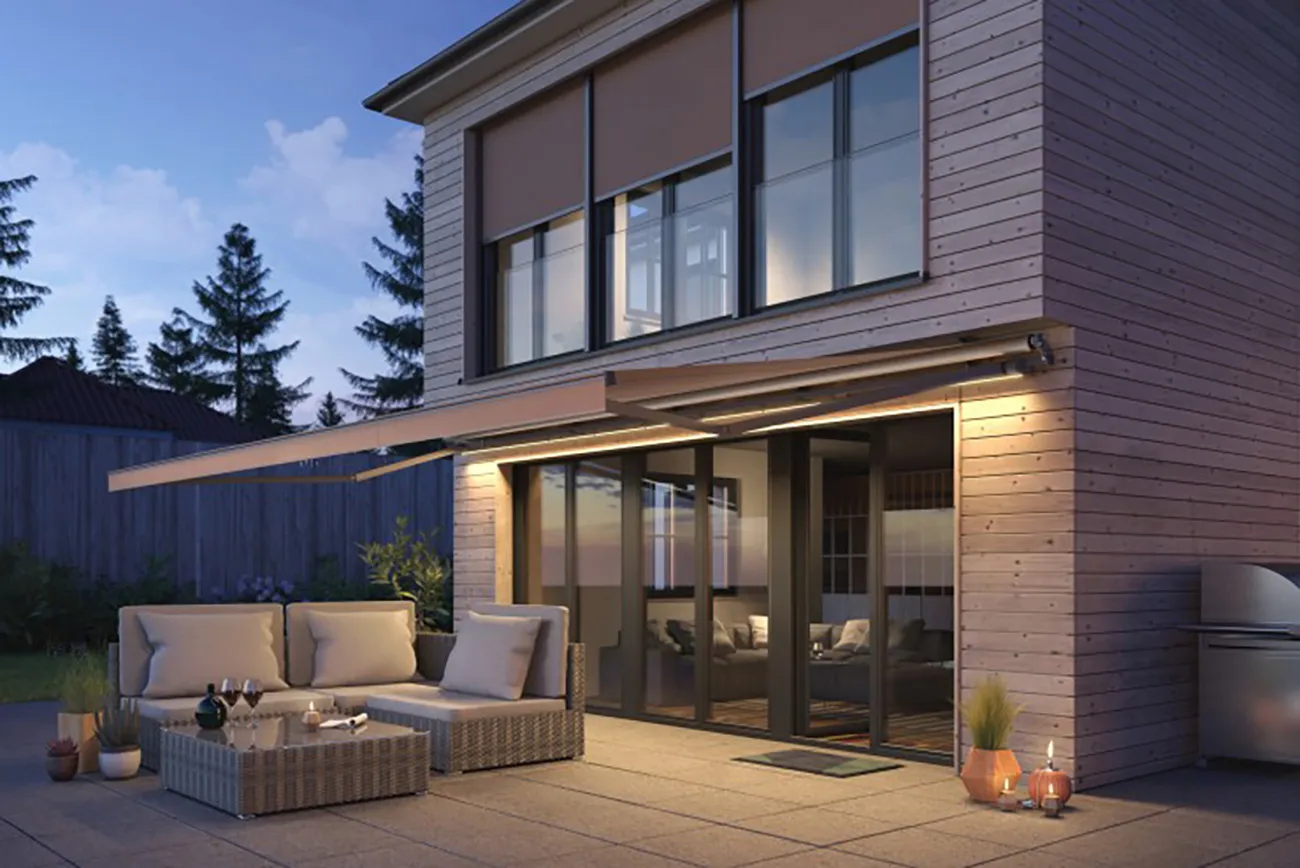
4 of 5 % Opening Factor - invisibility protection with optimal daylight output
An optimal screen for the living area, where you do not want to miss the view of nature, but still value a certain privacy. Moreover, even when the screen is closed, sufficient daylight should still enter the room so that artificial light is not needed. Screens with opening factor 4 or 5 % are connected to:
- high energy supply, with dark textile colors still providing good Fc values,
- Clearly reduced glare protection (class 0 or 1 according to DIN EN 14501:2021-09),
- good see-through in case of still present see-through protection (depending on screen fabric and color),
- greater color selection than screens with opening factor 0 % or 1 %.
These screens are thus theoretically not suitable for glare protection, where again the direction, respectively direction of view of the window plays a certain role. However, screens with an opening factor of 4% or 5% are suitable for use in all rooms that do not need to be darkened (bedrooms) or protected from glare (offices).
The higher the opening factor, the higher the energy supply
With an external textile sunshade, the energy supply depends mainly on the radiation transmission, which in turn consists of direct and diffuse transmission. Direct transmission depends on the opening factor of the screen: The higher the opening factor, the higher the direct energy input and thus the lower the shading effect. In contrast, the color of the fabric affects diffuse transmission. The lighter the color, the more radiation the fabric reflects and the heat energy enters the room as diffuse radiation. Correspondingly worse is the shading effect. For example, for a glazing with g = 0.53 and Ug = 0.6 with a white-gray screen, depending on the opening factor, the following sunlight reduction factors (Fc) occur:
- Opening factor 5%, design 3503 -> Fc = 0.15;
- Opening factor 1%, design 3103 -> Fc = 0.11;
- penning factor 0%, dessin 3003 -> Fc = 0.06.
With Blackout screens (0%), no radiation transmission occurs, therefore reflection is the decisive factor here. The higher the reflection, the less the system sun protection / glazing is heated and the lower the energy input is. Therefore, in terms of shading effect, light colors should be preferred before dark ones.
The higher the direct transmission rate, the better the see-through
Actually logical: With increasing mesh size of the fabric, and thus a higher opening factor, the see-through of a screen is improved. Also means: The more diffuse the transmission, the weaker the contrast to the outside, and thus the see-through. With light, reflective colors, the see-through is lower than with dark colors.
The lower the transmission, the better the glare protection
The protective effect against glare of a screen depends on both the direct and diffuse transmission - the lower these values, the less disturbing light penetrates through the screen and the lower the chance of glare, or the higher the glare protection class of the screen. The higher the glare protection class, the better the viewing comfort. Therefore, low opening factors and dark screen colors promote glare protection. The standard DIN EN 14501:2021-09 focuses on the Daylight Glare Probability (DGP) for determining the protection class. Since this change, the direct transmission (approximately equal to the aperture factor) must not exceed 3% to meet Class 3 or better.
The canvas from which dream screens are made
Screening fabrics consist of PVC-coated fiberglass yarns from which a textile fabric is woven, which is then fixed by thermal treatment. The special PVC coating ensures high form stability, which pays off considering the solar heat that occurs and the associated risk of distortion of the fabric in the window opening. A further advantage of the open Screen fabric is its high light transmission with simultaneous protection from sunlight and glare. The high UV resistance ensures permanently brilliant colors. Warema's collection of frame screens offers a wide selection of matching designs for all requirements and personal preferences.
The Warema collection of frame screens
When planning high-quality frame screens, you not only obtain a large selection of elegant designs from Warema, they also meet the highest functional requirements. Thanks to their well-thought-out technology, frame screens effectively protect against solar radiation, reduce energy consumption and also make a decisive contribution to facade design. Warema's collection of frame screens inspires with a large selection of designs, colors and fabric qualities.
Question about this story? Ask your question
Companies in this story
Keep following this
Get an email when a new story is published. No account needed.
- SubjectSolar shading & canopies
- CompanyWAREMA