zenronline.eu
EN

Platform on sun and daylight control, shutters, patio covers and closures

Of course, the construction and drive of awnings are important. In practice, however, the fabric determines the satisfaction of the end customer. Light penetration, heat reduction and visibility to the outside are directly related to the choice of the right fabric. This shifts the role of fabric from finish to starting point.
That shift is related to a different way of looking at performance. Increasingly, the properties of the fabric itself are taking center stage. Openness factor, reflection and absorption determine how much sunlight penetrates and how the indoor climate responds. Small variations in weave structure or color make an immediate difference here.
Which properties are decisive varies by application. In office environments, the emphasis is on reducing glare and controlling heat loads. In homes, visibility and daylight weigh more heavily. This requires a precise trade-off between transparency and solar control. An open fabric preserves the view to the outside, but allows more light through. Denser structures reduce solar radiation more effectively, affecting visibility and perception.
Material selection is also evolving. Cloths increasingly consist of composite structures in which fibers and coatings are combined to improve stability, longevity and performance. This shifts the character of cloth from textile to a technical product, developed for specific properties rather than just appearance.
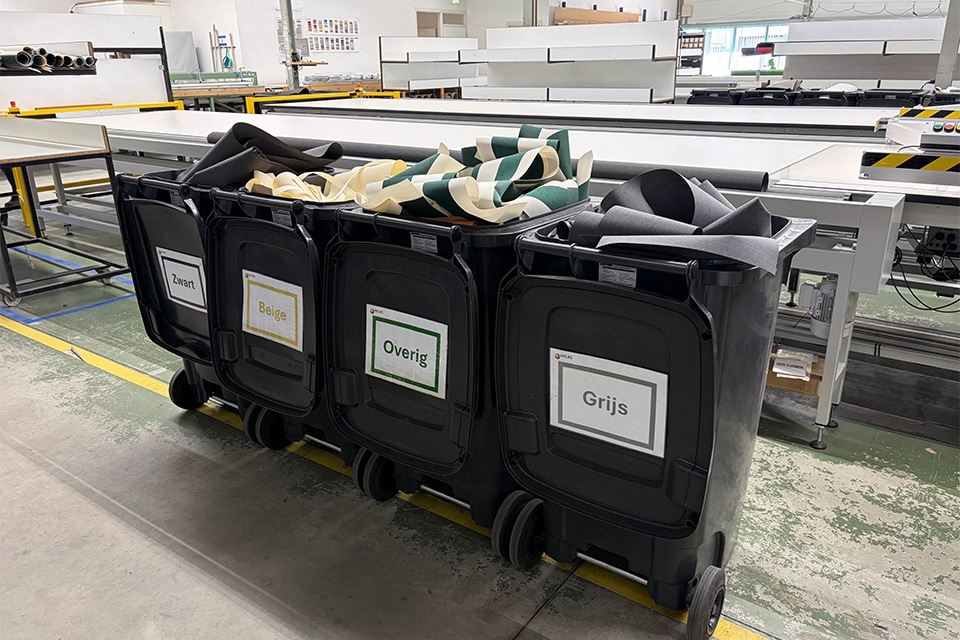
At the same time, awnings take on a more emphatic role in the facade image. The choice of fabric determines whether the blinds reinforce or contrast with the architecture. Thus the fabric has a visual role in addition to a technical one.
That development requires a different approach in advice and design. Sun protection specialists need specific knowledge to choose the fabric that fits the practice. Your trade journal Z&R closely follows that development and brings together knowledge, applications and practical experience.