zenronline.eu
EN

Platform on sun and daylight control, shutters, patio covers and closures
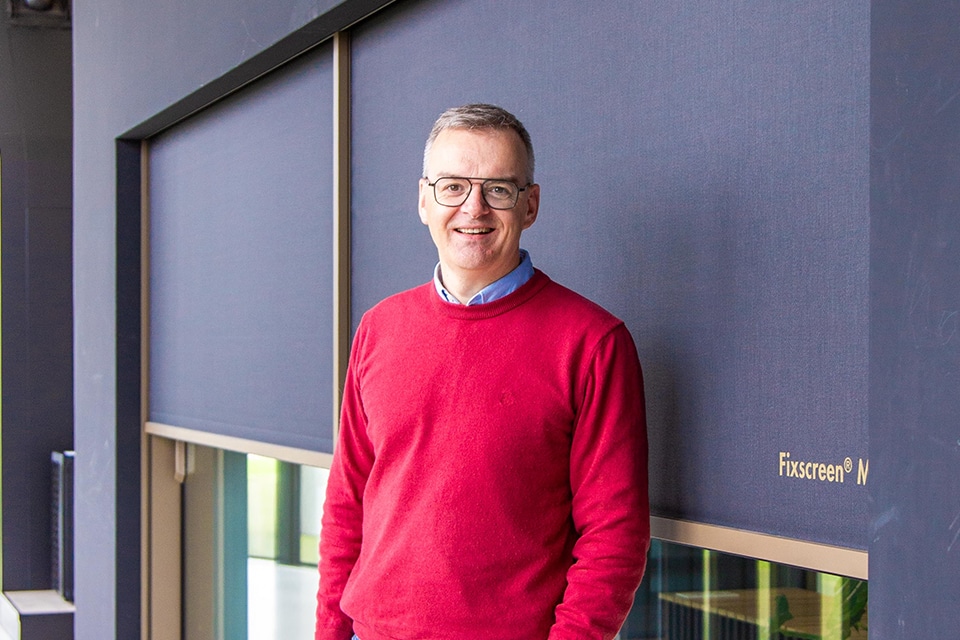
If we don’t act quickly and think ahead, a large proportion of our buildings are at risk of overheating as a result of climate change. That’s nothing new. What worries me most is just how close we are to that tipping point.
The Dutch OSKA (Climate Adaptation Standards Consultation) developed the ‘cooling ladder’ for this purpose: a clear and logical framework for addressing overheating in a sustainable way. The key? Work in the right order: start with a cool environment, then keep solar heat out, utilize passive cooling principles, and only use active cooling as a last resort.
The model makes the challenge concrete and the solution clear. Yet in practice, we still too often see buildings designed without a clear vision, which quickly makes active cooling seem like the only option. This is not solely due to regulations or the lack of clear design guidelines for summer comfort. Our industry also has an important role to play here. As sun protection specialists—and as part of the construction chain—we must actively collaborate to ensure our solutions are ‘top of mind’ right from the design phase. Only then can we create sustainable and future-proof buildings.
Preventing overheating goes beyond sun protection alone and, moreover, begins earlier in the construction process than is often thought: with the building’s orientation, the design of the surrounding environment, sufficient thermal mass, smart ventilation, and proper insulation. This means that collaboration is no longer a choice, but a prerequisite. By sharing knowledge and understanding each other’s roles, we can arrive at better integrated solutions.
Every day, I see how valuable it is when different disciplines reinforce one another. The collaboration between sun protection, natural ventilation, and sustainable heating and cooling systems leads to solutions that not only perform better technically but also offer added value in the fight against overheating. That is why I urge you: look beyond your own field of expertise. Only then can we create comprehensive solutions that not only look good but also make structural sense, leading to satisfied clients and end-users. The result is more efficient processes on the construction site, clear responsibilities, and optimal comfort.
The better we leverage each other’s expertise, the stronger the end result and the greater the end-user’s confidence. That confidence is essential, especially now that building performance standards are becoming increasingly stringent and overheating poses a structural challenge. Sun protection plays a key role in this. But as an industry, we can only fulfill that role if we find common ground on the ‘cooling ladder’ and truly collaborate—rather than working at cross-purposes.
Ultimately, we all strive for the same thing: buildings where people can live and work healthily and comfortably, without worrying about the indoor climate. My call to the industry is therefore clear: be open to collaboration, reach out to one another earlier in the process, and consciously use the cooling ladder as a guide. Only in this way can we keep overheating under control—starting from the initial design.