zenronline.eu
EN

Platform on sun and daylight control, shutters, patio covers and closures

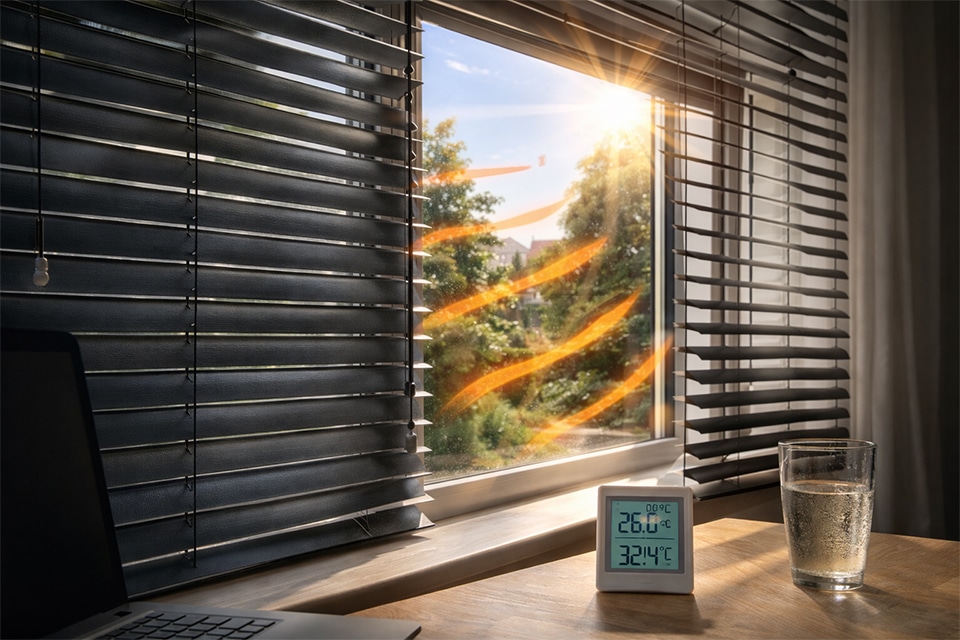
Indoor blinds are almost taken for granted in Dutch homes and utility buildings: roller blinds, Venetian blinds, pleated blinds, folding curtains and slats. They provide privacy, atmosphere and control over daylight. But with increasingly hot summers comes another question: do interior blinds also help against overheating? The answer is nuanced. Indoor blinds can contribute, but are rarely the main weapon against heat. That has everything to do with the physics of solar radiation: those who block the sun only behind the glass are, by definition, later in the process.
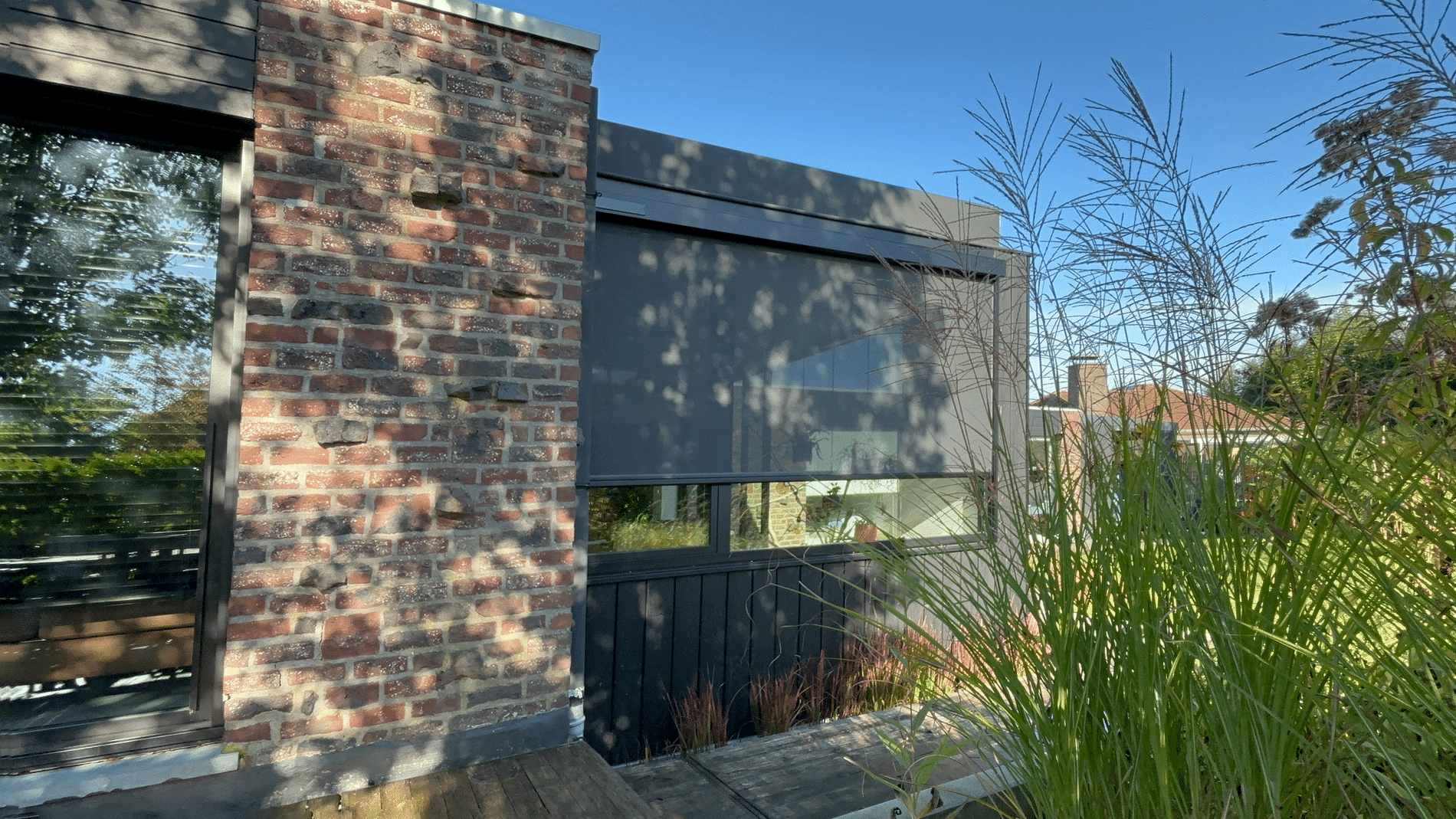
Solar shading works most effectively when solar radiation is intercepted before it reaches the glazing. European publications on solar shading emphasize that external solar shading has the greatest impact because heat does not penetrate the building. Internal solar shading - especially with light or reflective materials - can reflect back some of the radiation, but also transfers heat to the room via convection.
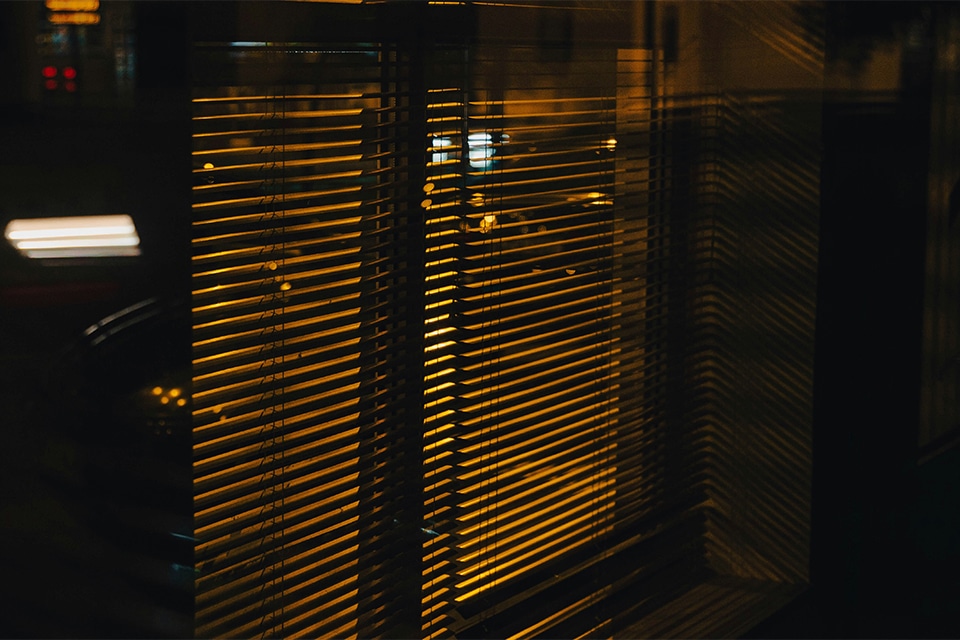
Milieu Centraal sums this up practically: exterior blinds work at least twice as well as interior blinds to keep a home cool. Their advice on hot days is clear: keep the sun out (preferably on the outside), keep it closed during the day and ventilate in the evening or at night when it cools down outside.
That doesn't mean that indoor blinds are useless. Its strength just lies elsewhere.
Indoor blinds are often the quickest and most feasible solution to visual problems: low sun on screens, glare in living spaces or lack of privacy in urban environments. This is not just subjective. European standard EN 14501 explicitly classifies blinds on properties such as glare reduction, daylight utilization, outward vision and nighttime privacy.
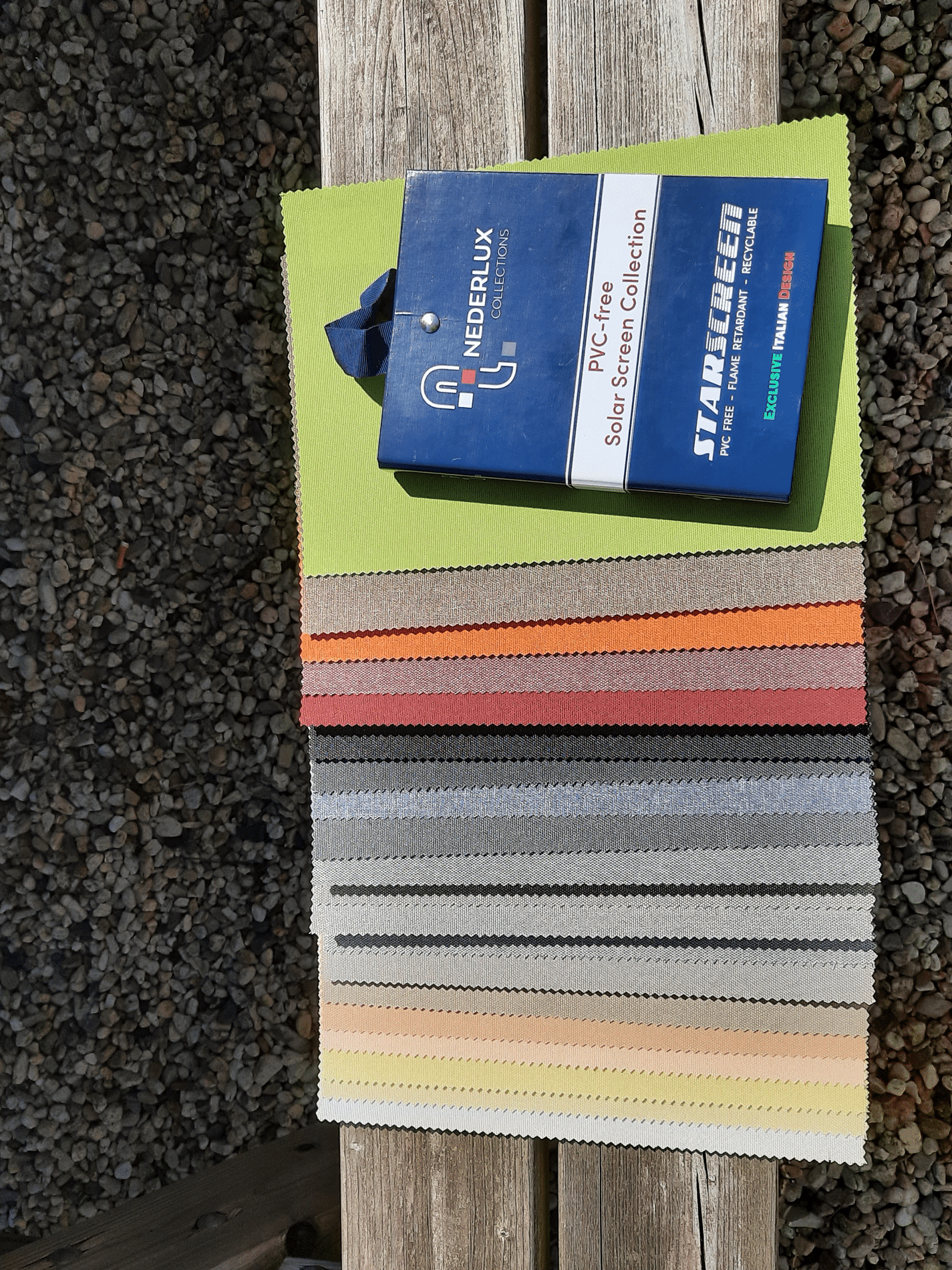
Color and material choice also play a role. Light or reflective fabrics reflect more light and radiation than dark varieties, which absorb heat more quickly. Those who choose interior blinds with heat limitation in mind therefore often end up with light materials. However, the fundamental limitation remains: solar heat is already through the glass. υ
Dutch practical and research projects show that overheating rarely has a single cause. In the Aedes project Heat in Rental Housing (about 80 homes with sensor measurements), direct daytime solar radiation was found to be the main factor for rapid warming. Effective strategies are keeping out sun during the day and ventilating in the evening and night.
The Hogeschool van Amsterdam emphasizes the interplay of technology and behavior: shading without night ventilation is insufficient, but ventilating without shading often is. Measures only really work when building, installations and occupant behavior are aligned.
This explains why indoor blinds often disappoint during heat waves. It is frequently applied as a loose measure while the heat load enters through the glass and heat dissipation is limited.
Indoor shading also plays a role within the Dutch energy performance and summer comfort requirements. In the run-up to BENG, it was investigated how best to assess overheating risks. The indicator TOjuli was found to correlate well with dynamically calculated temperature overshoot and was therefore included in the NTA 8800 determination method.
Since the introduction of TOjuli and the tightening as of July 1, 2024, merely applying active cooling is no longer sufficient. It must be demonstrated that the cooling capacity is actually adequate, or that solar gain is sufficiently limited by passive measures. This shifts the focus again to shading, glazing, overhangs and ventilative cooling. Internal blinds can contribute to this, but the starting point remains: keep heat out as much as possible, preferably in front of the glass.
The current method of determination is NTA 8800:2025, used for energy performance requirements and energy labels.
Those who approach interior shading professionally see it not as a separate interior choice but as part of a system: glazing, shading, ventilation and use. In European calculation methodologies such as ISO 52022-1, shading is always assessed in conjunction with glass, regardless of whether it is on the inside, outside or between sheets of glass. This is why manufacturers and consultants increasingly refer to ‘glazing + shading’ as one performance package.
Indoor blinds are also covered by a clear standards framework. Standard EN 13120 describes performance and safety requirements and addresses risks around construction, installation, use and maintenance. This makes indoor sun protection emphatically more than ‘cloth and cord.
Interior blinds remain a fixture in the Netherlands, and rightly so: they offer quick gains in light comfort, glare reduction and privacy. Against overheating, however, it is rarely the decisive measure, because solar heat already enters the building through the glass. Dutch practice and regulations therefore consistently point to the same approach: combine solar shading (preferably on the outside) with effective ventilation and appropriate use. This is the only way to achieve robust summer comfort.