zenronline.eu
EN
Platform on sun and daylight control, shutters, patio covers and closures

The hotel industry is facing major challenges. While the passion for travel is not disappearing, the expectations of hotel guests are changing, who are placing increasing importance on flexibility, personalization and sustainability. How can a hotel show customers that it is focused on sustainable development? At Aluprof, manufacturer of aluminum systems for construction, including window and façade systems, as well as roller shutters, screens and patio covers, they have their ideas about that. Fits nicely into the Theme Hospitality covers and awnings is the first thought. But their approach is broader, hence a separate place for their story.
The ecological crisis has also focused public attention on the tourism industry, which is responsible for 5% of global CO2 emissions.1 The wide-ranging and often destructive impact of tourism on the environment must, according to many, be offset by positive actions that help restore confidence in the industry.

Much of these actions will have to fall on the shoulders of the hotel industry, which accounts for about 20% of the carbon footprint generated by the entire tourism sector.2 It is estimated that at least 75% of the hotel industry's environmental impact comes from overconsumption of resources and unnecessary operational costs.
According to the industry, it is therefore time to start reducing this impact, especially as hotel guests are increasingly consciously choosing hotels that make environmental efforts. Research has also shown that staying at a hotel dedicated to protecting the environment has a positive impact on loyalty and satisfaction with the stay.3

The overconsumption of water, food and energy is responsible for much of the carbon footprint generated by hotels. It is the energy losses that are most problematic, both for the environment and for the wallets of investors and hotel owners. To clarify the situation, it is estimated that in Belgium about 20% of hotel rooms are unoccupied. With nearly 2,000 hotels across the country4 it is as if 400 - which do need to be heated, cleaned and managed - are constantly empty! A reduction in energy consumption would clearly translate into both a reduction in CO2 emissions and lower operational maintenance costs.
So much for a sketch of the situation. The next question is whether the problems are solvable. Is a passive hotel possible? As it turns out, it is, because it already exists! The first passive hotel (officially certified by Passivhaus Institut) was built in 2010 in Oberstdorf, in the southwestern German state of Bavaria. It consumes 70% less energy than a traditional hotel of similar size and requires as much as 85% less energy to heat it.

"Since then, many hotels have been built using passive building technologies," observes Emmanuel Gregoire, Managing Director at Aluprof Belgium NV. "And even if they only use some of the possible solutions, every option to reduce energy consumption is important," he stresses. A number of sustainable building solutions can be distinguished that can be used in existing and newly built hotels. An overview.
To the classic methods of extracting green energy - heat pumps and solar panels - modern building solutions can be added. One of these are photovoltaic skylights. This is a new, innovative solution that combines the traditional function of a window with energy production.
"Using quantum dot technology, a photovoltaic skylight based on the MB-SR50N EI profile can generate free energy," clarified an expert from Aluprof. "The cells remain invisible and the glass remains completely transparent, allowing light to continue to enter unobstructed. The skylight also meets all fire safety standards in terms of load capacity, density and fire insulation, which is especially important in hotel buildings. Such solutions could be used, for example, in conference rooms or hotel corridors."
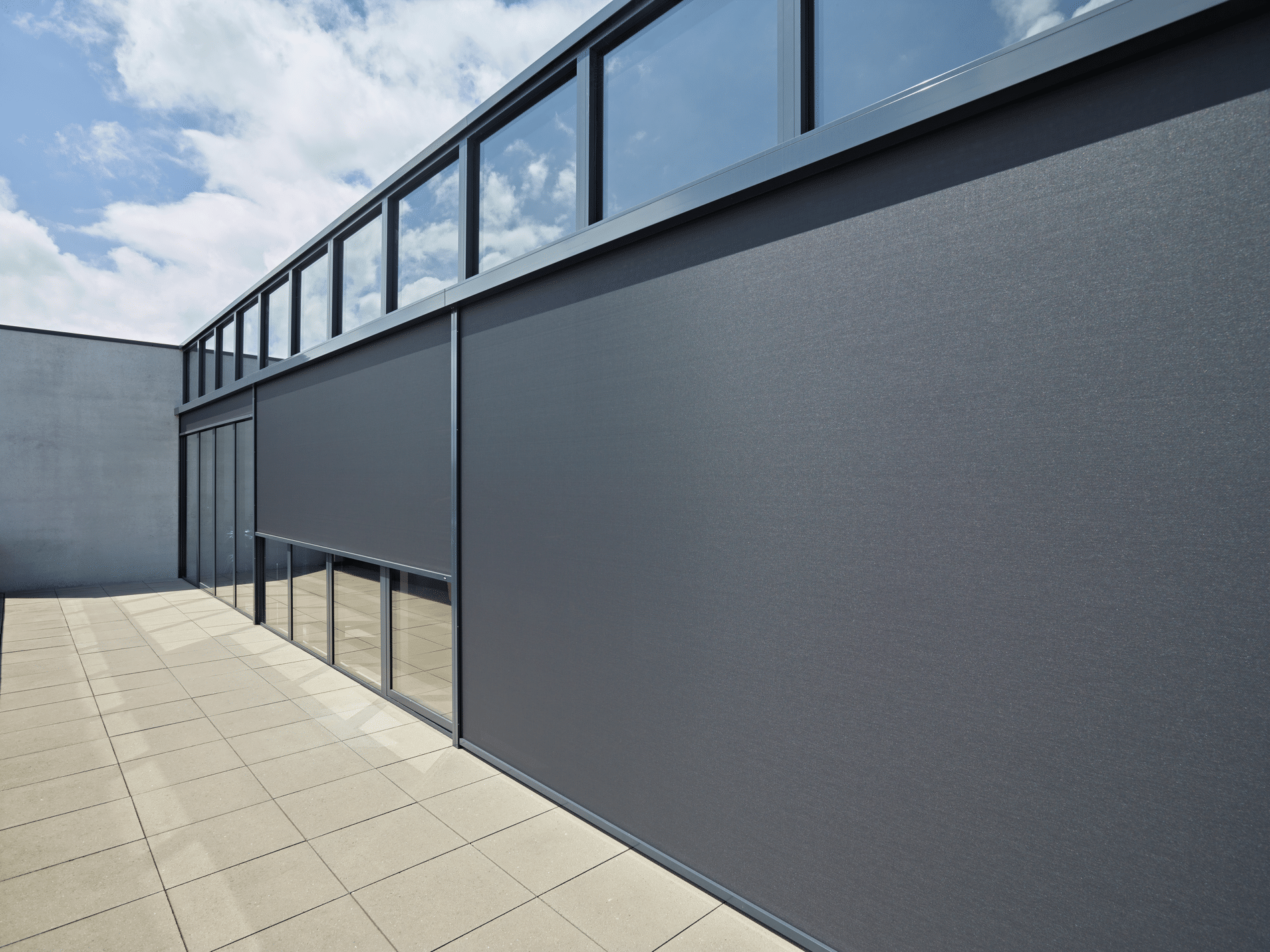
Another solution, which can also be used in existing hotels, are screens and outdoor blinds. Both solutions block out the sun and cause rooms to heat up less quickly and severely, reducing energy consumption for air conditioning.
"Exterior blinds, such as Aluprof's Skyflow, allow users to adjust the angle of inclination of the slats as they choose in order to optimally block out the sun, as well as control the degree of room darkening as desired," said Emmanuel Gregoire. "We also make them in large sizes, for glazing with large areas. SkyRoll screens are also becoming increasingly popular with hotels. They block out the sun and annoying glare and provide privacy while maintaining an outside view. The maximum area of the SkyRoll ZIP or Classic system is as much as 5000 by 5000 mm, allowing them to be used at modern hotels with large areas of glass."
"Screens are an excellent solution for conference rooms, hotel lobbies, restaurants as well as individual hotel rooms," Gregoire continued. "They can completely replace the blinds used by some hotels, offering guests more visual comfort while reducing cleaning and maintenance costs."
"An indisputable advantage of both outdoor blinds and screens is that they are clearly visible to everyone. A hotel's pro-ecological activities therefore stand out immediately, especially if guests are further informed about them through appropriate information in the hotel room," Gregoire adds.
"Rising energy costs, increasing ecological awareness in society and growing guest expectations in this regard are forcing the hotel industry to become more sustainable," Gregoire concludes. "The industry is coming to the aid of hotels with modern solutions, such as photovoltaic windows or solar shading, which help to improve both operational costs and the image of hotels. It's worth using them, both for the planet and for business purposes."
Neem dan rechtstreeks contact op met Aluprof.
 Contact opnemen
Aluprof S.A. is part of the listed Group Kęty S.A. The company is one of the leading producers of aluminum systems in Europe. The company has representative offices and distribution centers all over Europe - in Belgium, Germany, Great Britain, Ukraine, the Czech Republic, Hungary, Romania, Denmark and the USA. The headquarters of Aluprof S.A. is located [...]
Bekijk Bedrijfsprofiel