zenronline.eu
EN

Platform on sun and daylight control, shutters, patio covers and closures

Europe is getting warmer. According to the Intergovernmental Panel on Climate Change (IPCC), between now and 2050, the average number of days per year that our continent requires air conditioning will increase by about 30%. This will significantly increase the demand for energy and associated greenhouse gas emissions for cooling spaces in buildings in the coming decades.
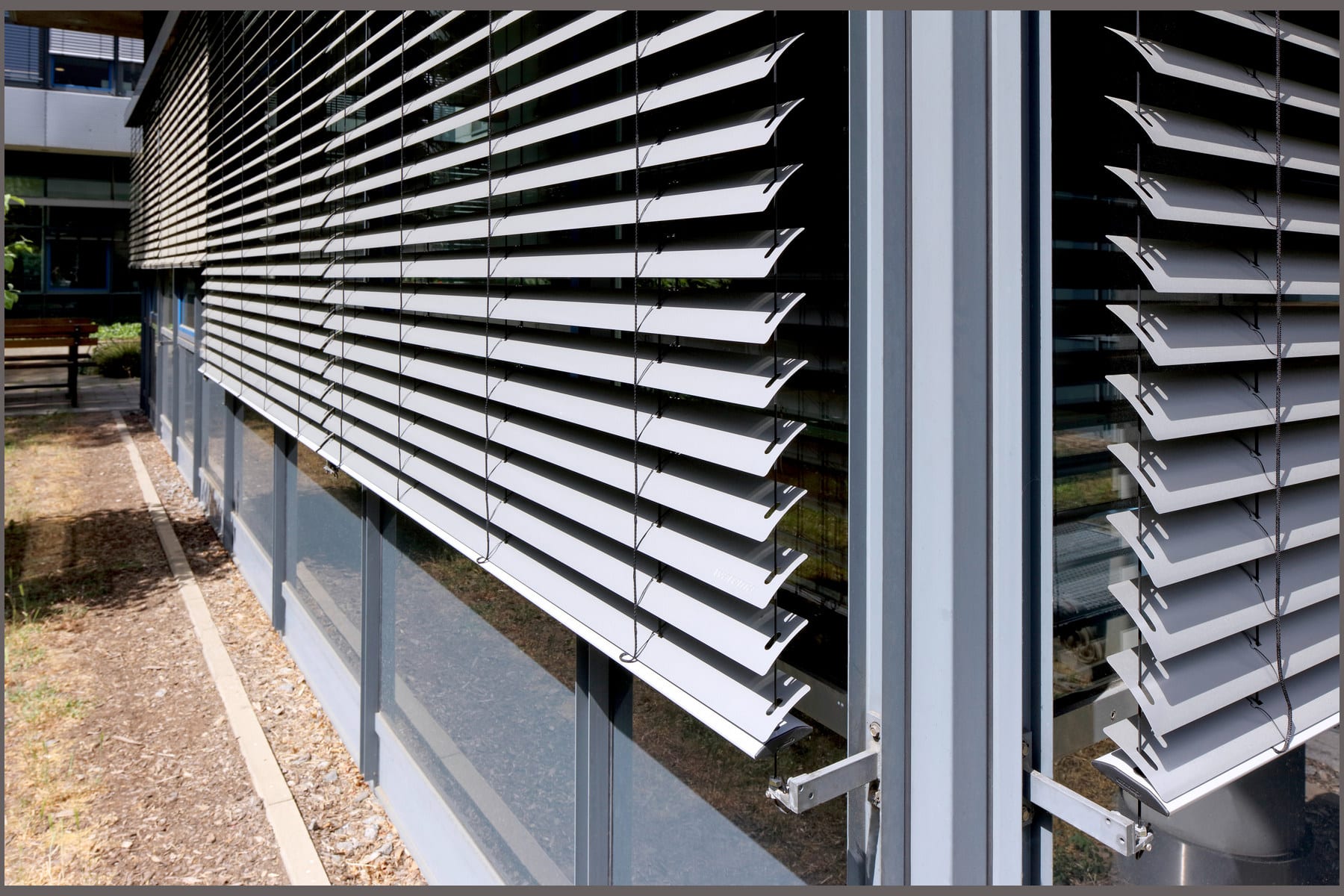
A recent study by Guidehouse, a leading global provider of consulting services to public and commercial markets, has produced strong results showing that automated solar shading can minimize energy consumption, largely reduce greenhouse gas emissions, and at the same time adapt Europe's building stock to the effects of climate change, such as the growing problem of overheating.
Automated solar shading allows optimal reduction of active cooling needs in the summer and mid-season, which is the focus of this study, and optimal use of solar gains in the winter to minimize heating needs.
Currently, less than 50% of EU buildings are equipped with blinds, a very large proportion of which do not perform optimally due to manual operation.
Starting from established baseline data, the Guidehouse study makes projections for future emissions from air-conditioning across Europe, described as “Business As Usual” (BAU), and compares these projections with potential emissions under a scenario in which 70% of the buildings requiring air-conditioning are equipped with automatic shading systems, described as a “preferred scenario.”.
By calculating the difference between the BAU and the alternative scenarios, two effects of inclusion of shading are considered:
- Cooling load reduction for existing space -cooling systems.
- Avoiding additional air conditioners, or reducing the power of air conditioners, as they will no longer be needed by 2050 to enable a comfortable indoor climate in new and existing buildings.

Dynamic solar shading can cost-effectively halt the predicted trend of increasing need for air conditioning. It is a key technology to support greenhouse gas reduction and adaptation goals. In the “BAU” scenario, 45% of buildings in Europe will need air-conditioning by 2050, up from 28% today. In the “preferred” scenario, where dynamic shading is effectively implemented, that number would remain the same (Figure 2), resulting in a 58% reduction in greenhouse gas emissions (Illustration 1).
Between today and 2050, up to about 100 Mt of cumulative CO2,eq emissions could be avoided in the “Preferred” Solar scenario compared to the “BAU” scenario.
A reduction of 100 Mt of CO2,eq emissions is equivalent to reducing the annual CO2 emissions of 22 million cars3.
In terms of energy consumption, the introduction of dynamic shading can save up to about 60% of electricity for space cooling by 2050, or about 870 TWhel of final energy saved between 2020 and 2050. A saving that will be realized by the end users on their energy bills.
Automated sun protection also optimizes energy performance in winter. Compared to fixed sunshades or manually operated dynamic sunshades, automated dynamic sunshades also maximize solar gains.
This 870 TWhel corresponds roughly to the final energy consumption of Spain4, with its 47 million inhabitants in 2020


The study further demonstrates that dynamic shading makes it possible to achieve climate neutrality by mid-century at significantly lower overall costs. The cost of the required conversion is far outweighed by the cost of inaction or delayed action. What will it cost to effect this change? The study examined the cost of implementing more dynamic solar shading and found that the initial capital expenditure (CAPEX) is largely cost-neutral compared to air conditioning systems. In addition, significant savings can be made in ongoing operational costs (OPEX).
The conclusion is that switching from more air conditioning to dynamic shading systems from 2020 to 2050 could yield accumulated savings of about 285 billion euros. This amount can be compared to the GNP5 of countries like Luxembourg (€64 billion bn5) and Finland (€237 billion bn5) combined in 2020.